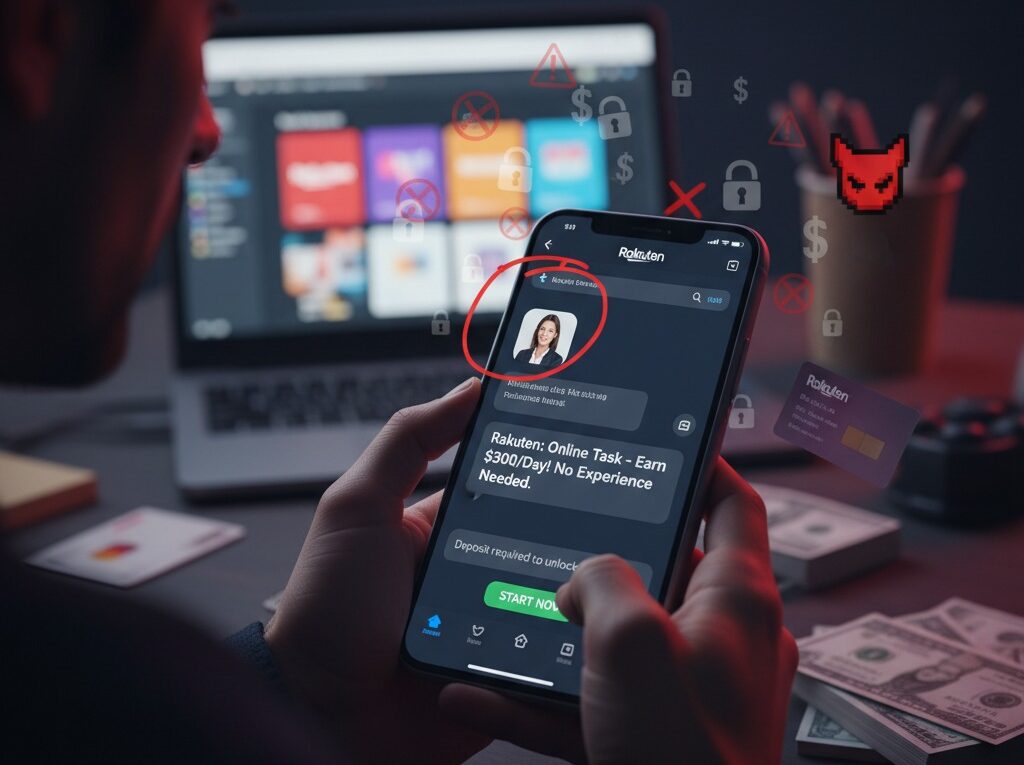
The Rakuten Task Scam: How It Works, Red Flags, and What to Do
If you’ve received an unsolicited WhatsApp or Telegram message offering an easy, high-paying job from “Rakuten,” you are likely the target of a sophisticated and dangerous scam.
This “task-based” job offer, which promises great pay for simple tasks like “optimizing data” or “boosting product sales,” is not a real opportunity. It’s a trap designed to steal your money.
Here’s everything you need to know about the Rakuten task scam, how it works, and how to protect yourself.
What Is the Rakuten Task Scam?
The Rakuten task scam is a type of employment fraud where scammers impersonate the well-known Japanese e-commerce company, Rakuten. They contact potential victims through messaging apps like WhatsApp, offering a “work-from-home” job that involves completing a series of online “tasks” to earn a high commission.
The scam is not limited to Rakuten; fraudsters use the names of many large e-commerce companies (like Amazon, Shopee, and Alibaba) to appear legitimate. The core of the scam is the same: luring victims with the promise of easy money.
How the Scam Works
These scams are psychologically manipulative and follow a predictable pattern designed to build false trust before draining your bank account.
Step 1: The Unsolicited Contact
You receive an unexpected message on WhatsApp or Telegram from an unknown number. The sender, often with a professional-looking profile picture, introduces themselves as a recruiter or manager affiliated with Rakuten. They offer an “online part-time job” with flexible hours and incredibly high pay (e.g., “$200-$500 a day”) for just 30-60 minutes of work.
Step 2: The “Training” and Fake Platform
If you show interest, you’ll be directed to a fake website or a web-based app that looks like a legitimate Rakuten portal or “task platform.” You’ll be asked to create an account. A “trainer” or “mentor” will guide you through the first few tasks.
Step 3: The Initial Payout (Building Trust)
The first few tasks are simple, like clicking on products to “boost” their visibility or “grabbing orders.” For completing these tasks, a small commission (e.g., $10-$20) appears in your platform “wallet.” To build trust, the scammers will often let you withdraw this initial small amount to your real bank account. This “proves” the job is legitimate.
Step 4: The Trap is Set (The “Prepaid” Tasks)
Once you’re hooked, the tasks change. You’ll be presented with “higher value” tasks or “product bundles” that promise a much larger commission. However, there’s a catch: to “unlock” or “complete” these tasks, you must first deposit your own money. They’ll claim this is a “deposit” or “prepayment” that you’ll get back immediately, along with your commission.
Step 5: The Squeeze and the Frozen Account
You pay the $100 for a task and see your “balance” jump to $150. You try to withdraw, but you can’t. The “mentor” tells you that you’ve been “upgraded” to a “combo task” and must complete a set of 3 or 4 more tasks before you can cash out.
Each new task requires a larger deposit. If you hesitate, they use aggressive sales tactics:
- “Your account will be frozen if you don’t complete the task.”
- “You will lose all your previous earnings and deposits.”
- “This is a one-time opportunity! Just pay this last fee.”
They may claim your account has a “negative balance” or you need to pay “taxes” or “unfreezing fees.” This cycle continues, squeezing more and more money out of you until you either run out of money or realize you’ve been scammed.
7 Red Flags of a Task Scam
- Unsolicited Job Offer: Real companies don’t recruit for high-paying jobs via random WhatsApp messages.
- “Too Good to Be True” Pay: Earning hundreds of dollars for an hour of simple, unskilled “tasks” is unrealistic.
- Vague Job Description: They use confusing terms like “data optimization,” “order grabbing,” or “merchant support” but can’t explain the job’s actual business purpose.
- Use of Personal Messaging Apps: Professional recruitment happens over email, LinkedIn, or official company portals, not Telegram or WhatsApp.
- Guaranteed High Returns: The promise of guaranteed, high-percentage commissions is a classic sign of a financial scam.
- Requests for Your Own Money: NO legitimate job ever requires you to pay your own money to get paid. This is the biggest red flag.
- Urgency and Pressure: Scammers create a false sense of urgency, telling you tasks are “limited” or your account will be locked if you don’t act fast.
What to Do If You Are a Victim
If you have already lost money to this scam, it can be devastating. Take these steps immediately:
- Stop All Contact: Block the scammers on all platforms. Do not send them any more money, no matter what they promise or threaten.
- Contact Your Bank: Report the fraud to your bank or financial institution. They may be able to reverse recent transactions or flag your account for protection.
- Report to Authorities: File a report with your local police and national cybercrime reporting agencies (such as the FTC’s reportfraud.ftc.gov in the US).
- Secure Your Accounts: If you shared any personal information (ID, bank details), assume they are compromised. Monitor your accounts closely for any suspicious activity.
A Final Warning
The Rakuten task scam is a brutal and effective fraud. By impersonating a trusted brand, scammers exploit people’s desire for flexible work. Always be skeptical of unsolicited offers. Remember the golden rule: If a job seems too good to be true, it always is.
